

A list without a reason to contact someone today is just names.
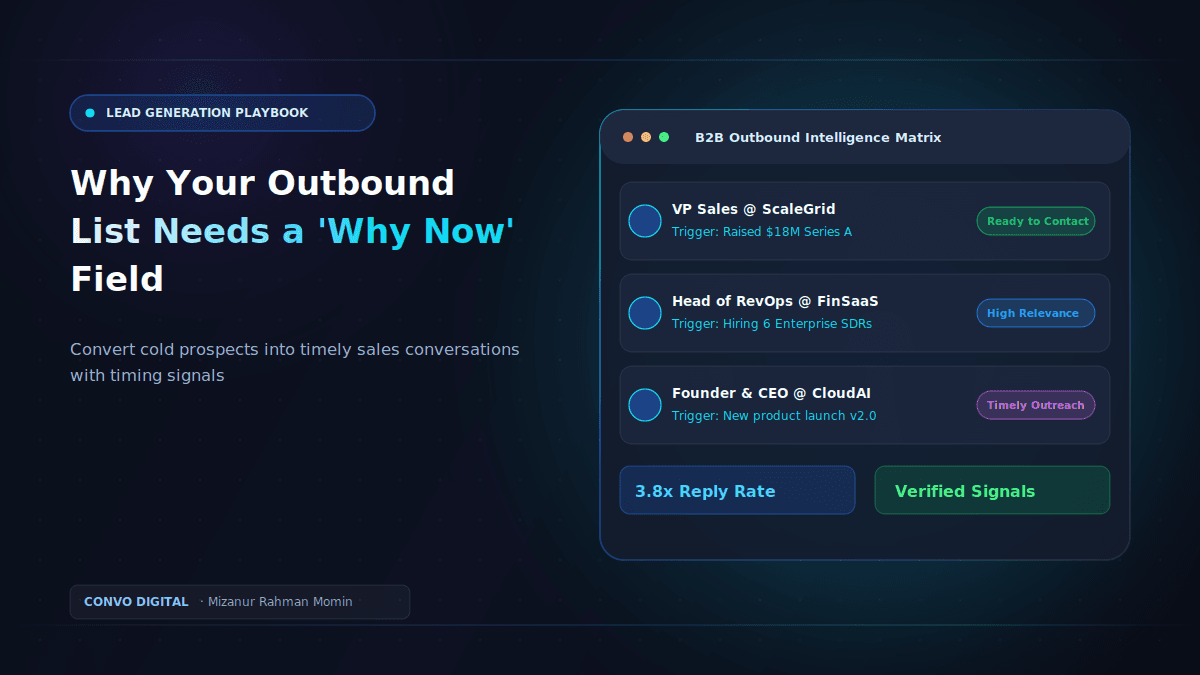
Add one column to your list — why now — and both your research and your message get easier. The column answers one question: why is this person worth contacting this week?
The problem with a plain list
Most lists have the same fields: name, company, title, email.
That is enough to send an email. It is not enough to write a good one. So the message falls back on generic lines that sound like everyone else's.
The missing piece is the reason. Without it, you are guessing.
What a "why now" field holds
Anything that shows a timely reason to reach out.
- They just launched something.
- They are hiring for a role you can help with.
- They posted about a problem you solve.
- They changed tools or moved to a new market.
- Their company appeared in the news.
If you cannot find a reason, the contact is probably not ready.
How it changes your research
A "why now" field turns research into a filter.
Instead of collecting every name that matches a title, you collect the ones with a real signal. The list gets smaller and better.
How it changes your message
The first line writes itself from the field.
- Weak: "I wanted to reach out about your marketing."
- Better: "I saw you launched a new plan last week. Congratulations."
The second version shows you did the work. It also gives the reader a reason to reply.
A simple pre-outreach checklist
Before a name goes on the send list:
- The person matches your ideal customer.
- You found at least one timely reason.
- The email address is verified.
- You can say why you are contacting them in one line.
- The message would still be useful if you removed your pitch.
If a name fails the checklist, it waits. It does not get sent.
Keep the field alive
Signals go stale. A launch from six months ago is no longer a reason.
Review the list before each campaign. Remove the rows where the reason is old, and add new ones as you find them.
That is the whole idea. One extra column, better research and messages people actually answer.