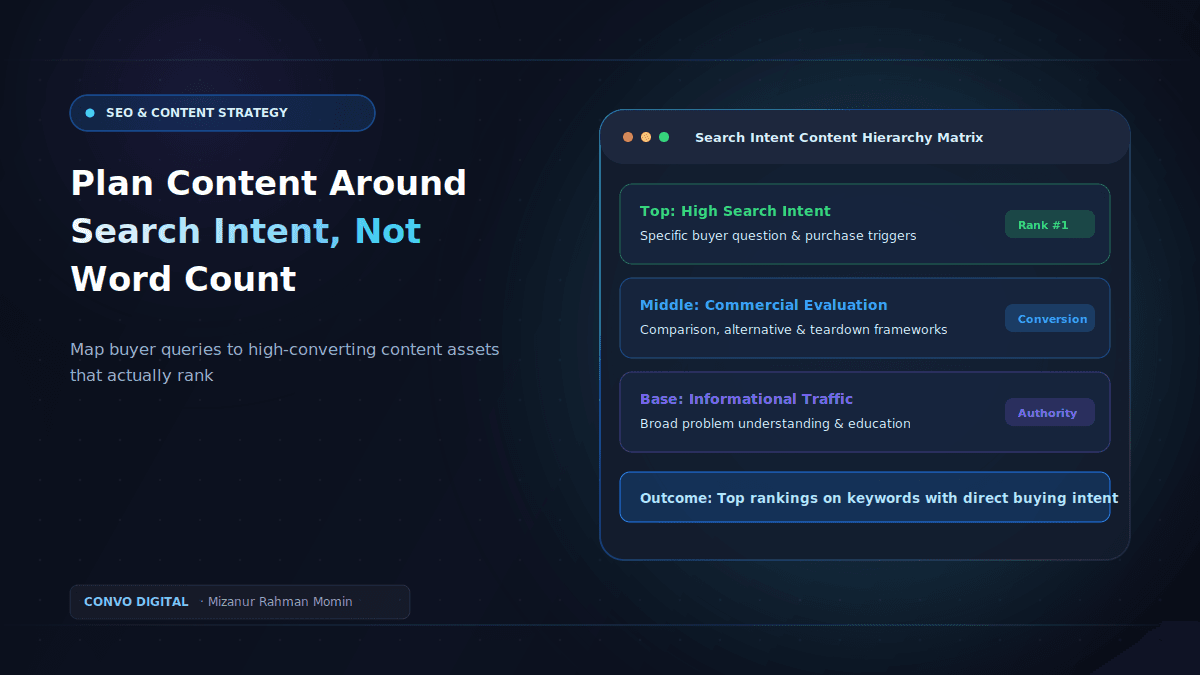


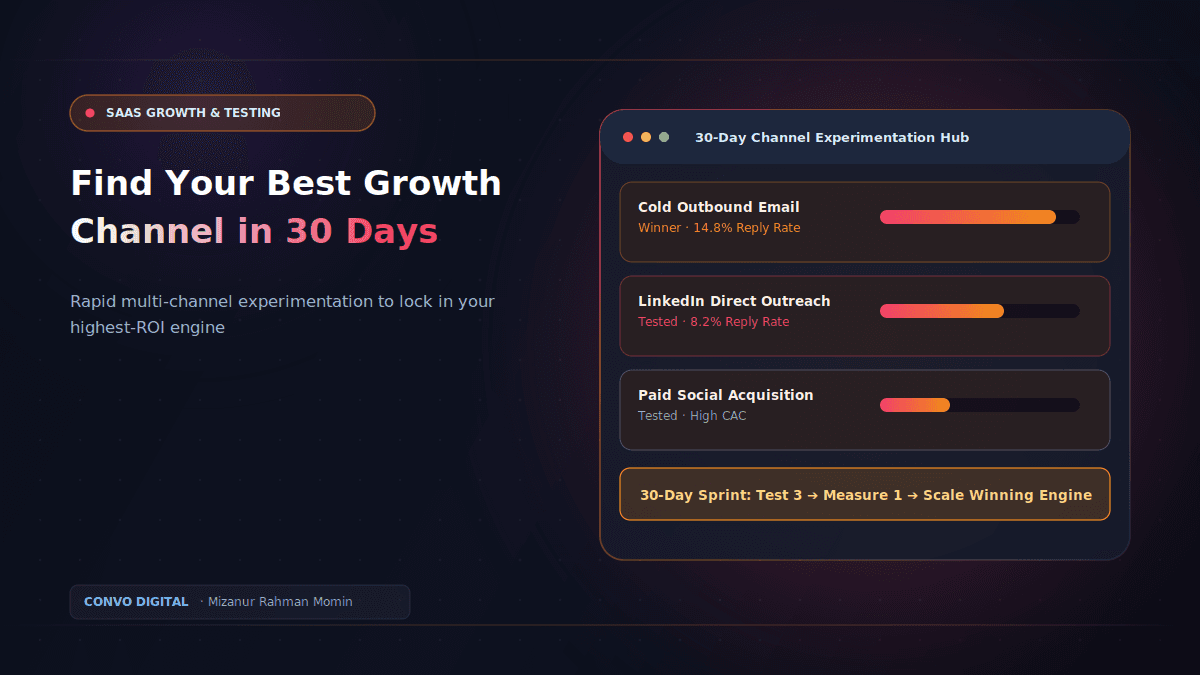
You do not need every channel. You need one that works.
Pick three channels. Test each with a small budget and a clear goal. Keep the one that starts real conversations and drop the rest.
Why most channel tests fail
Teams try everything at once. Then they cannot tell what worked.
- Ads run next to cold email.
- Social posts go out with no clear goal.
- Nothing is measured the same way.
After a month, there is activity but no answer.
Start with three channels
Choose three that fit your product and your buyers.
- Cold email, if you can build a good list.
- LinkedIn outreach, if your buyers are active there.
- Communities and giveaways, if you want early users and feedback.
- Content and SEO, if you can wait for slower results.
- Paid ads, if you have budget to learn quickly.
Three is enough. More than three makes the results hard to read.
Give each channel two weeks
Two weeks is long enough to see a signal and short enough to change course.
For each channel, decide before you start:
- What you will send or publish.
- How many people you will reach.
- What counts as a real result.
A real result is a reply, a signup or a booking. Not an impression.
Keep a simple scorecard
A spreadsheet is enough.
| Channel | Effort | Replies | Signups | Cost |
|---|---|---|---|---|
| Cold email | Medium | |||
| Low | ||||
| Community | Low |
Fill it in as you go. At the end of the month, the answer is usually obvious.
Decide and commit
At the end of 30 days:
- Keep the channel with the best real results.
- Fix the one that was close, and test it again.
- Drop the rest without guilt.
Then put your time into the winner.
What to avoid
- Changing the message every day.
- Judging a channel in three days.
- Measuring likes instead of replies.
- Running five channels and understanding none.
Next
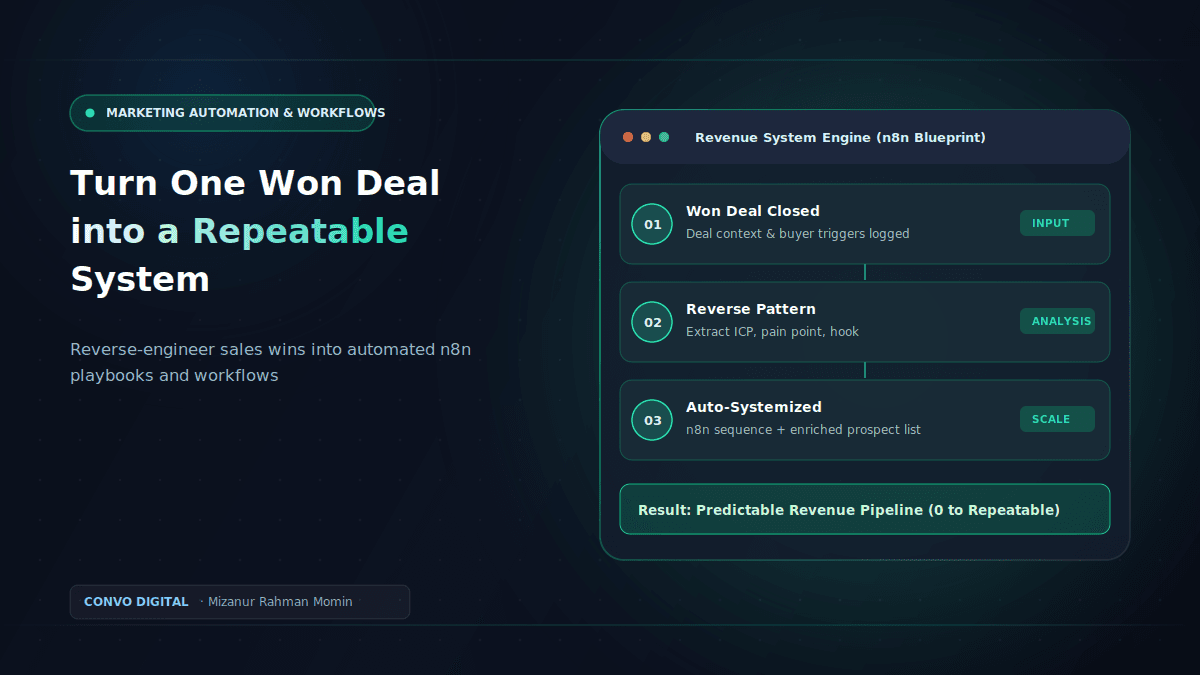
If you want to try a community channel, see how the SaaS lifetime-deal campaigns work, or read turning a won deal into a repeatable system.